The next regular meeting will be on Thursday 18th January 2024
Thus. 18.01.24 at 16:30 and every 8 weeks:
Thus. 15.02.24 at 19:30 and every 8 weeks:
Note that the December meeting is not happening. I wish everyone a great Christmas period, whatever you are doing. Bring or sent me your topics/questions for our next drop-in meeting. Here are some notes from our November meeting which again had new and returning faces.
Addendum to Local Plan submission, ACT’s draft response.
The council has made several changes to the Local Plan, the amended text (in red) can be commented on by 22nd of December. ACT has a draft response, we encourage everyone to respond to the Climate and Ecological policies if these have been amended. It is important that as many individuals and organisation comment on these policies.
Cooperation with developers of UK’s first ‘low carbon’ road development, the A382!
Three ACT representatives will be attending a meeting with the developer and DDC’ project manager in November. This is a Live Labs funded project is exploring a number of ways to reduce ghg emissions from both the build and operational phases. Our meeting is to explore how ACT can provide constructive input to the proposed measure and how these are calculated.
We discussed the need to ensure that any claims are verifiable so that ‘greenwashing’ is avoided. As an example, we looked at a plug-in hybrid black cab, reported in a reputable outlet, which claims to have avoided 200,000t CO2. There were enough numbers provided to make a back-of-the-envelope calculation suggesting that this claim was only possible if embodied emissions and emissions from electricity to charge the vehicles were ignored. An initial response appears to confirm that these were not included in the claimed emission savings. Probably an oversight, but still greenwash!
ACT launches Carbon Lite training.
With ~75% of ghg emissions coming from burning fossil fuels for energy, ACT is keen to support organisations and individuals become more effective in tackling climate change. We have found that many, including those actively working on mitigation, are not sure how to decide on appropriate actions for them.
ACT’s Carbon Cutter (CC) programme has been running for over a year now with several active trained CCs. The three 1.5 hr training sessions can be challenging for some who are not yet sure of how active a role they want to play in their community. The new single 2 hour training is aimed at those who want to be better informed, but not yet ready to becoming a CC.
All training, resources and follow-on support is provided by ACT for free. Anyone interested, please contact ACT’s CC programme direct.
DCC plan to trial ‘gully solutions’ for on-street EV charging.
Following on from our discussion last time on this topic, I’ve found out that DCC will soon have a project lead to investigate/evaluate a number of on-street charging solution for running a cable from the home to the vehicle parged outside.
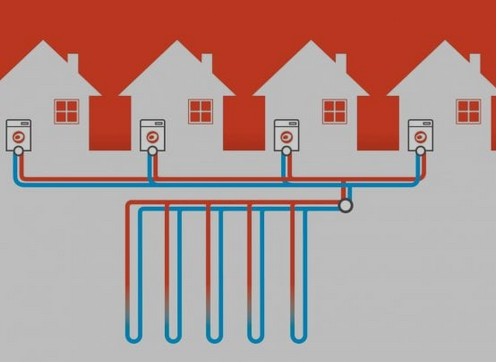
Are bore holes a realistic option for GSHPs?
We had a good discussion about heat pumps (HP) and the difference between Air Source HP and Ground Source HP. Unsurprisingly, this topic has come up on many occasions, but we never put numbers to the costs.
It is widely accepted that GSHPs have a better Seasonal Performance Factor (SPF) compared to ASHPs given the same building, heating system and usage. This is because ground temperatures remain nearly constant at 8-12OC in the UK at sea level. These will be at the upper range in the Southwest and increase by several degrees 15 m or more below the surface. Thermal properties of different soils will cause some variations as heat retention.
Other reasons to go for an ASHP, as quoted by an Energy group member, is problems with siting an ASHP. This may have more to do with perceptions as these fan driven systems can be mounted discretely without causing noise or visual problems.
Unless otherwise measured, a useful rule-of-thumb is to assume an SPF of 2.7 for ASHPs and 3.5 for GSHPs. This can vary significantly depending on the heat loss characteristics of the building and how the heating system is set up/used. We have looked at several examples and calculated one case study comparing gas and ASHP for the same property, it would be good to get other measured examples.
There are now a number of GSHP installers/manufacturers in the UK, for example Kensa in the Southwest. Ground loops, just below the surface, remain a popular choice if there is sufficient land area for the required heat demand. More recently, deep vertical borehole versions have become more widely available as more people with limited space have opted for a HP system, e.g. terraced housing.
GSHP systems will be more expensive to install, but have several operational advantages. So how much more expensive are they? Much will depend on what groundworks are needed and how accessible these are. The actual HP units and any changes necessary to the building/heating system will be very similar for both GSHP and ASHPs. Here is a useful guide on pricing and the different options with pictures and a video.
Mel Stride MP meets “active climate groups”, but refuses to invite ACT.
Mel Strides invitation e-mail was a great opportunity for ACT, “inviting each of the core active climate change groups across the constituency to send one representative”. Unfortunately, ACT were refused a representative on spurious arguments which turned out to be false!
Although ACT’s question was touched on by representatives from other groups, the subsequent report suggested that Mel Stride, despite his understanding and concerns about climate change, was not fully aware of some of the contradictions caused by recent government policy reversals. Despite the many reports and briefings from the UK’s Committee on Climate Change (CCC), all the indications suggest that those in government making decisions are not fully versed with the critical importance of the legally binding Carbon Budgets. Opting instead to aim for a distant Net-Zero by 2050.
ESO Market Survey.
Dominic reported back from the recent Electricity System Operator event he’d attended. This discussed network access, storage and demand side response. For more information on these topics and more you can look at Regen’s resources, including Storage & Flexibility.
Written by Fuad
Energy group coordinator


Leave a Reply