The next regular meeting will be on Thursday 23rd November 2023 at 16:30 contact us for details.
Here are the topics covered, bring your question, however small/large, next time.
ACT Energy webpage improvements.
Jules has implemented a facility to access the guides direct from the pictures at the top of the webpage. This saves users having to scroll down and click on the highlighted text. Also, clickable guides now open the latest version of the selected document, rather than having to look this up in a list of documents.
We’ve only put in two clickable pictures at the moment but will add the rest soon.
New report on grid-level electricity storage.
We discussed the Royal Society’s report on large-scale electricity storage sent in by Dominic. The excellent report has a good executive summary worth a read.
The wording used to define the problem and constraints is a reflection of the government’s (via Ofgem) priorities, so it is questionable to what extent they are addressing the elephant in the room, namely Climate Change.
Their target electricity supply of 570 TWh/a by 2050 is interesting, in 2022 it was 275 TWh/a. This is either acceptance that only a small part of Transport and Heating will be decarbonised through electrification, or it is a complete underestimate of what is needed to avoid a 1.5OC climate tipping point, given that total UK energy consumption in 2022 was 1,558 TWh/a, some two thirds of that is for Transport and Heating. It could also be that there is a policy to half our energy consumption from Transport and Heating before electrifying its energy source, but somehow government policy suggests the opposite. You can check out TECs’ calculations for the UK & Teignbridge here.
A report from Regen suggests we’ll need to deliver the ~570 TWh 15 years earlier , that is by 2035.
And another Regen analysis showing how the network might function on a challenging day in 2035.
Just have a think video about pumped storage refers to an Australian study which has produced an atlas of potential closed loop sites https://re100.eng.anu.edu.au/global/ (unfortunately not many of these are in the UK). For the UK RheEnergize is developing high density hydro BEIS is contracting for a 250kW/1MWh demonstrator outside Plymouth in a tungsten mine. These are faster to construct than a water-based system, and potentially suitable in more sites.
National Infrastructure Commission advice on Hydrogen and Transport infrastructure.
Parliamentary committees and national commissions are releasing reports challenging government policy on delivering the legally required Carbon Budgets (abbreviated to Net-Zero). Here are a couple of examples we briefly looked at:
Road and Rail Schemes needing clarification against Net-Zero
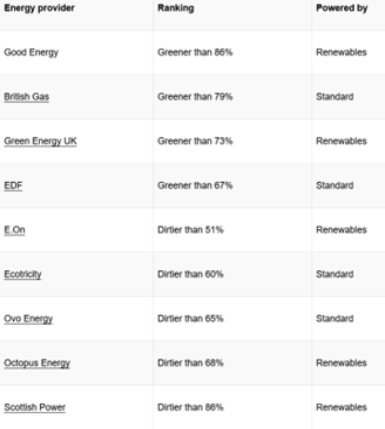
Utilities’ claim to low-carbon websites, how significant is it?
It’s good that businesses want to show how ‘green’ they are. It has become an essential marketing message as a result of consumer demand, but also greater awareness for the need to act, and quickly. The danger is that some, deliberately or inadvertently, exaggerate their claims. Be particularly wary of those who use the colour green to make their claims of being the best.
Most of the claims are correct, otherwise they could fall foul of the law. What and how they compare things is pushed to the limit, occasionally beyond, in order to stand out in a competitive market. It is sometimes difficult to know what to believe, this is where numbers do not lie. If they don’t provide verifiable numbers, assume it’s greenwash. If they do provide numbers, give these some consideration to see if they make sense, are relevant and make a significant difference.
Here is an example from an energy supplier showing off their low-carbon credentials. While the numbers do check out using the same website carbon calculator, there is no mention of what emissions are generated from using their website. One has to question the importance of this comparison when the typical webpage download emits less than 1g CO2e.
Electric Boilers, what are they and should they be recommended as a low carbon option.
This has recently become quite topical, so we spent some time looking at these and discussing alternative technologies for space and water heating. Some of the interest stems from impressive green claims made for Cylo, claiming an “emission-free” heating system. Note the green background colour!
The UK manufactured Cylo electric boiler received innovation funding from DCC, so we should expect someone has checked out the claims being made for it. It may well be a good quality electric boiler, but how innovative are electric boilers in delivering the claimed solution to tackling climate change?
Electric boilers have been around for decades. They work like an electric shower but are much more powerful as they have to heat the water running through the radiators. Coincidentally I bought and installed one in a flat in London in 1981, I transported it from Germany on the back of a motorcycle!
Looking at some of the numbers quoted on running costs and comparison with HPs or gas boilers, you can see a common thread. Basically, they compare the worst-case setup with the best-case Cylo system and don’t compare some crucial features. Using the numbers published for Cylo, being a direct electricity heating system, these would also apply to any electric boiler:
Assuming a very low heat loss in the system, say 95% efficient, it will consume 70kWh / 0.95 = 73.7 kWh electricity
An average HP with an SPF of 2.75 (the measured average for recently installed systems) delivering the same 70 kWh of heat energy per day would consume
70kWh / 2.75 = 25.5 kWh electricity
A like for like comparison to emissions from a HP, an electric boiler would be a ratio of 2.9:1 (73.7 / 25.5), so almost 3 times greater emissions, certainly not emission-free as claimed for the Cylo.
Natural gas prices are of course less than 1/3 those of electricity (~8p vs 30p on average in 2023). At a gas boiler efficiency of 90%, gas would be slightly cheaper to run than an electric boiler.
In terms of daily operational emissions (for 70kWh of heat energy); electric boiler 20kg CO2e; gas boiler 17kg CO2e ; HP 7kg CO2e based on 2022 government data.
Without comparing prices and features it’s not appropriate to recommend one make over another. There are other manufacturers, being more established they don’t need to resort to full on greenwash marketing, companies like Heatrae Sadi or EHC are examples. The Which? Article gives a good summary of electric heater pros/cons. It is a shame that Cylo felt the need to take advantage of people’s desire to reduce cost and emissions, they know very few consumers check the numbers or read the small print. This is why we provide a lot of guides, tools and training through ACT.
No doubt there is a niche application for these systems, where it makes financial and even emission sense. At best this would break even today, but of course make complete sense if we ever have zero-cost and zero-emission electricity.
Glen brought this to the group’s attention. A nifty solution to charging your EV from your private supply when parked outside your home. The system appears to be unique in the UK, for the moment. It has approval from at least one council and is being trialled in others. It looks a bit on the expensive side at ~£1,000, but does include installation and registration with the council. In the absence of other practical solutions, it will undoubtedly be the answer for some.
We’ll check to see if DCC are likely to approve this for Devon Highways.
Best wishes
Fuad
Coordinator for the ACT Energy group
covering energy, built environment and transport
Leave a Reply