I can hardly believe it’s already December! The festive season might be upon us, but there’s still so much amazing work happening across our Teignbridge parishes. Just a few weeks ago, several of us attended the Stars of Teignbridge award ceremony, where the Wildlife Warden Scheme was nominated in the Collaboration category. While we didn’t take home the top prize, being recognised as one of the final four was a fantastic achievement. The event was a lovely celebration of the incredible efforts volunteers dedicate to their communities—thank you for the fabulous work you do in yours! (I’m sure our wildlife agrees!)
In this months newsletter:
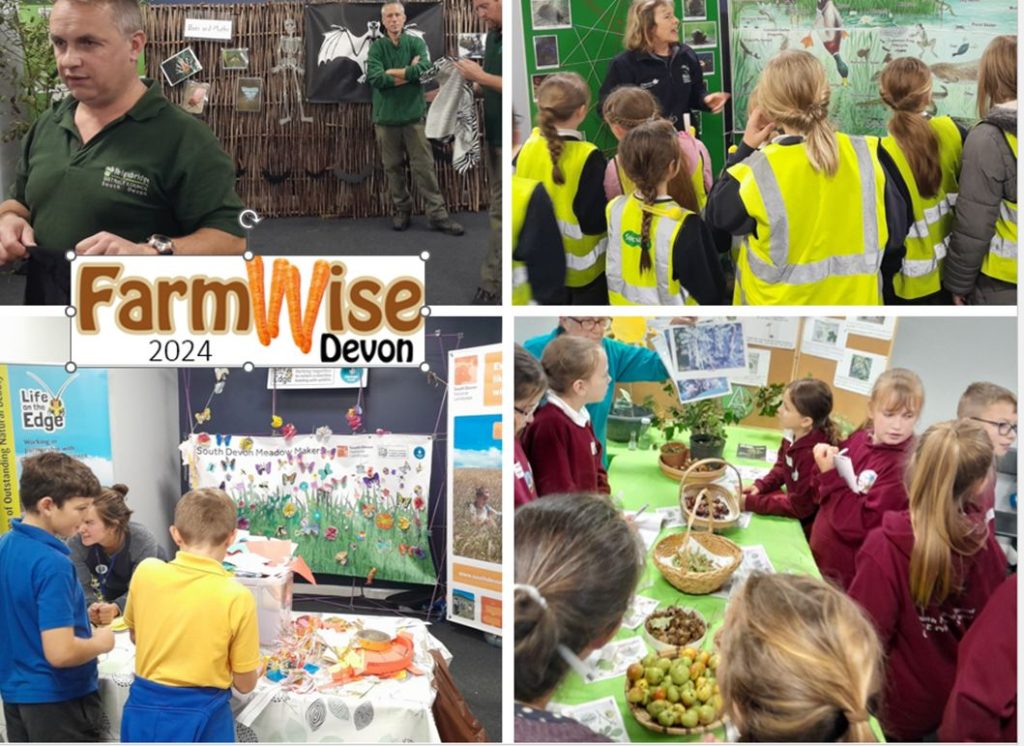
- Farmwise Exeter: A Fun-Filled Day of Kids, Food, Farming, and Wildlife!
- Exploring Ancient Trees and the Ancient Tree Inventory
- Resources to Engage Your Parish Council on Biodiversity Duty
- Waxcap Walks: Hunting for Grassland Gems
- Using Native Bulbs to Guide Contractors
- Book Recommendation
- Dates for Your Diary
- Round Up of Wildlife Warden Activity Across Teignbridge
- Final Thoughts
Farmwise Exeter: A fun-filled day of kids, food, farming, and wildlife!
Thank you to Audrey Compton, for writing about our recent trip to Exeter:
In early October Chudleigh Warden Tess, Vicky and I set off for Westpoint and the annual Farmwise day. Every year around 1,500 excited children spend a day finding out how their food is grown, how farm animals are looked after – and how our wildlife fits in. The children move around the many stands in groups of about 15, stopping for about 10 minutes to find out key facts.
We had put together a short activity about trees – their seeds, nuts and fruits, plus some really important stuff about how trees help us: taking in and storing carbon dioxide, producing the oxygen we need to survive, capturing the sun’s energy (that ultimately gives us our food), as well as providing wonderful habitats for the wildlife we all love.
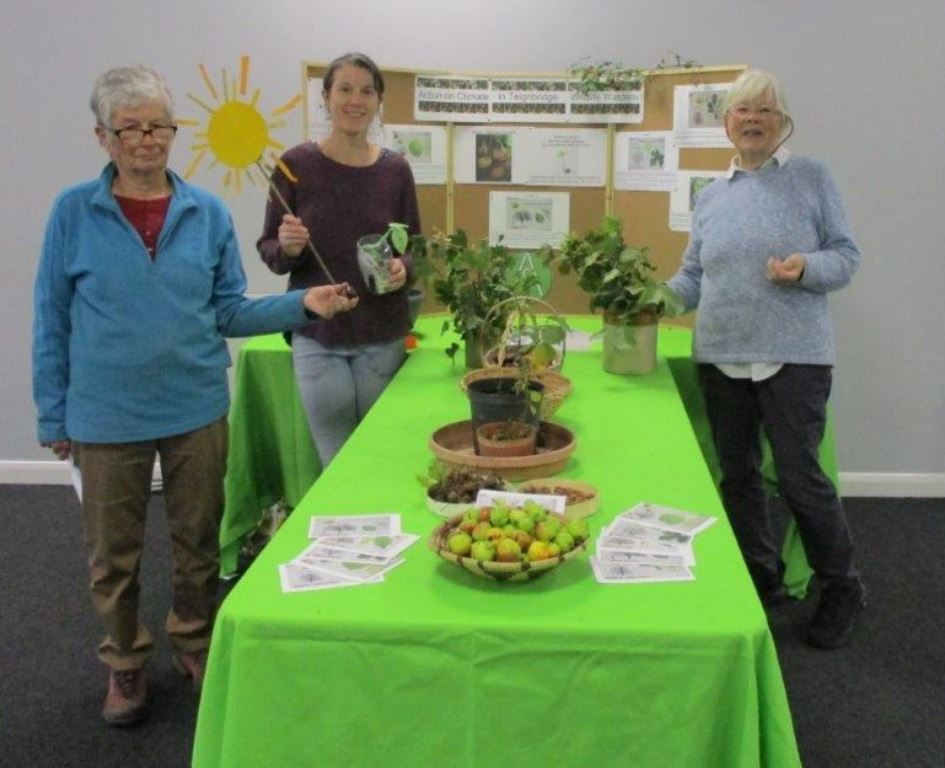
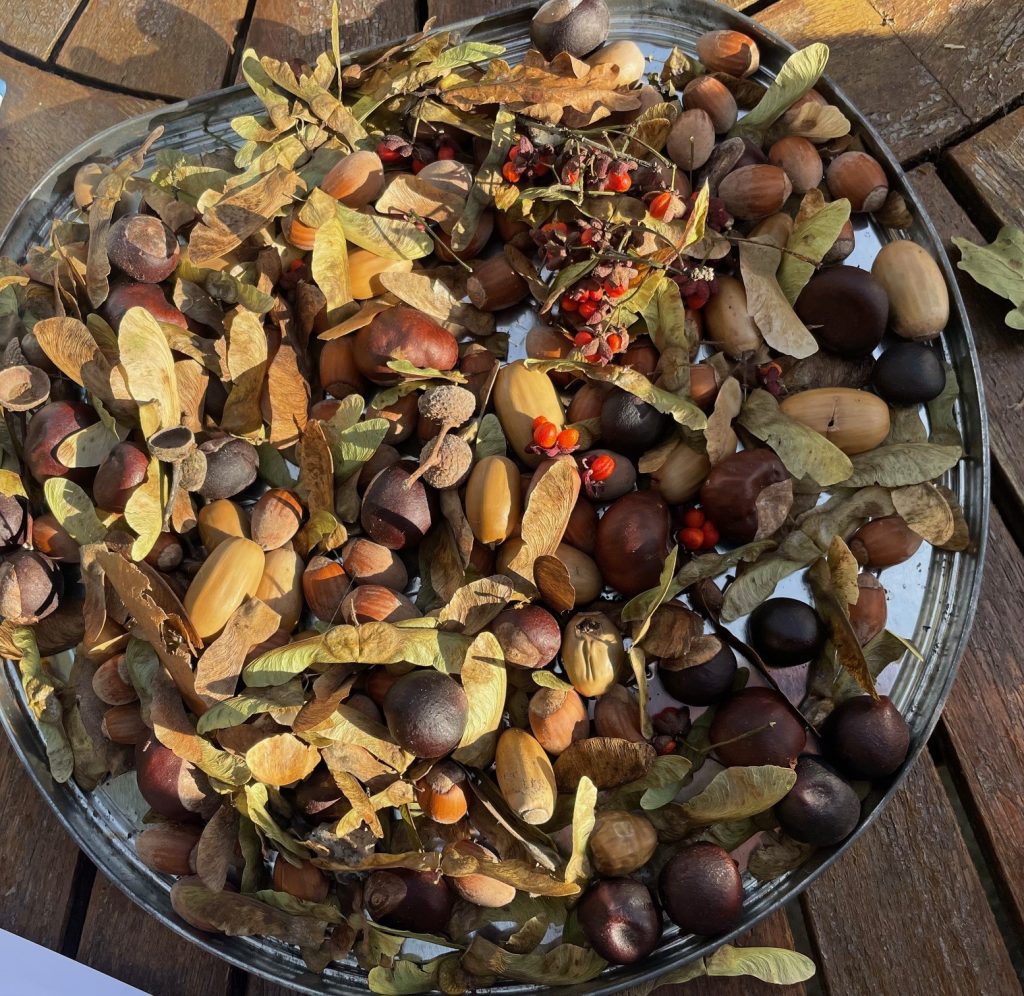
We asked the children to tell us what trees do – and it was great to find that a good number of these 9 and 10 year olds knew a lot already! We gave each of them a postcard with pictures of a tree, its flowers and fruits and asked them to hunt for its fruits or nuts from one of our baskets – we had acorns, crab apples, maple ‘helicopters’, conkers and hazel nuts. They just loved feeling the different textures and enjoyed the absolute beauty of acorns and conkers! For me, the best thing of all was when a 9 year old boy thoughtfully stroked a hazel leaf and said ‘If I dyed my hair green, could I catch the sun’s energy too?’
An absolutely knackering day, but very worthwhile!
Exploring Ancient Trees and the Ancient Tree Inventory
Thank you so much to Dunsford WW Jess for writing this fantastic article for her local Parish News. Following on from last weeks National Tree Week, I thought it would be a good time to share it with everyone here too! It’s a great activity to get involved with during the winter months.
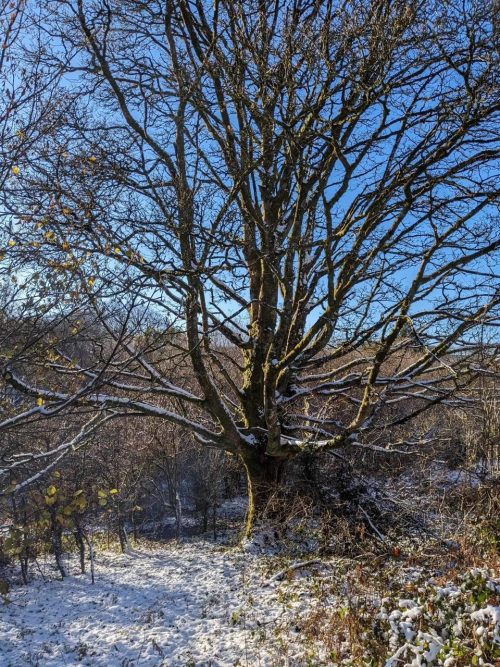
With the leaves falling, autumn is a good time to look up and enjoy the beauty and variety of the trees around us. As the patterns of branches begin to show, the many different shapes and sizes of our trees become apparent.
But how often do we stop to think about how old our trees are?
The Ancient Tree Inventory is a mapping project run by the Woodland Trust. Since the project began, in 2006, well over 200,000 ancient and veteran trees have been recorded, although there is still a long way to go. These very old trees are important for their wildlife value and carbon-storing capacity, and for their links to local stories and culture. Protecting such ‘living legends’ is one of the Woodland Trust’s top priorities.
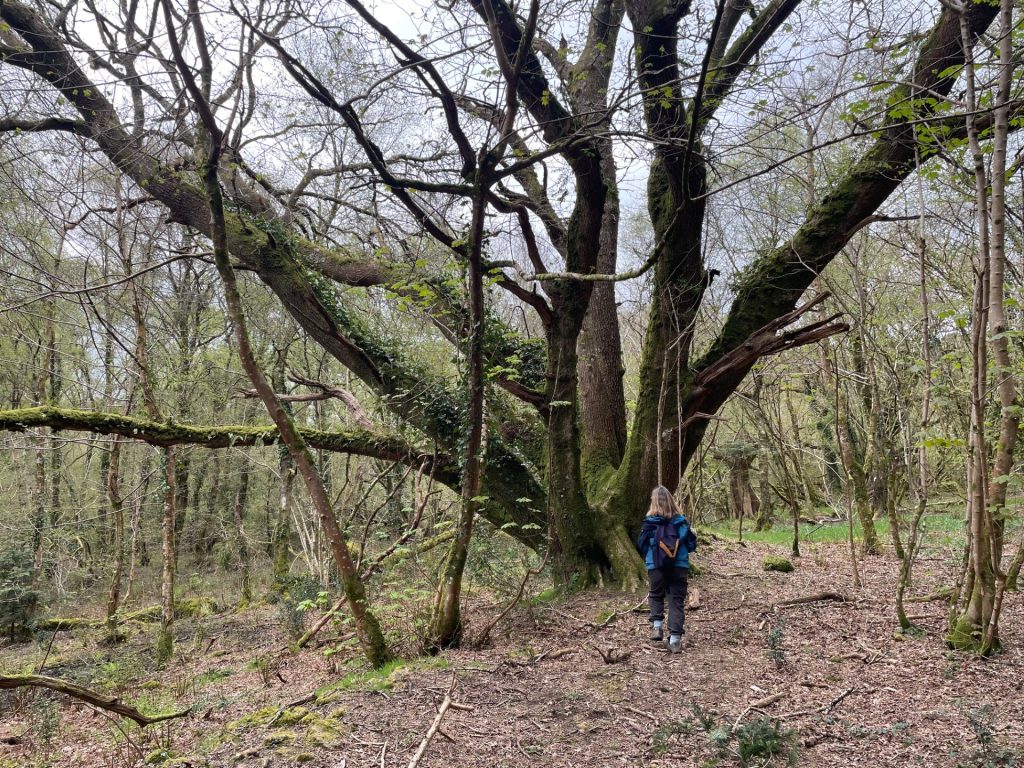
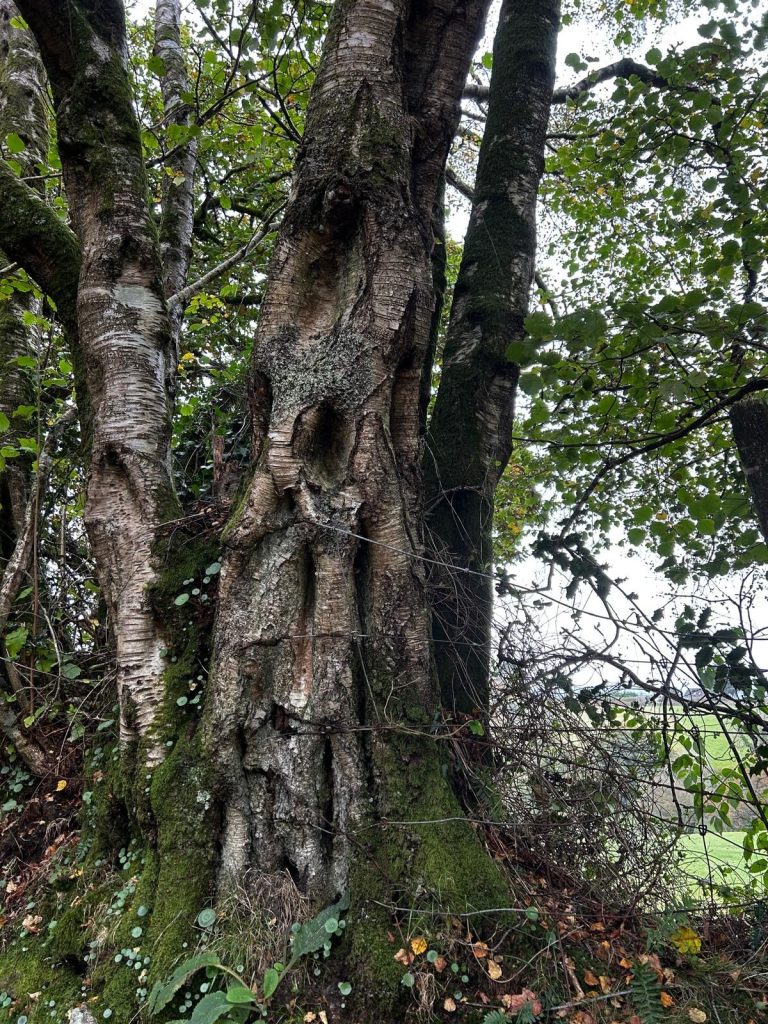
An ancient tree is defined as one in the third and final stage of its life. Since different species have varying lifespans, there is no set age for when a tree becomes ancient. Birch trees, for example, are fast-growing and relatively short-lived, and can be ancient at 150 years old, whereas the common yew (Taxus baccata), the longest living of all the UK’s native tree species, may be 800 years old before it starts to show ancient characteristics and can live for over 3,000 years! Meanwhile oaks (Quercus species) and sweet chestnut (Castanea sativa) can have a lifespan of over 1,000 years.
Identifying the age of an ancient tree isn’t easy. Its trunk may be hollow, so there is no chance of counting its growth rings. But despite varying greatly in size and shape, ancient trees share several common features which may help us to spot them. Along with hollows and crevices, these features include: a reduced canopy, a low or squat shape and a wide trunk; dead or broken branches and possibly a ‘stag-headed’ appearance, with bare antler-like branches in the crown; and the presence of fungi, indicating wood decay. A veteran tree is a mature tree that shares some of the characteristics of ancient trees. These features will develop further over time, meaning that veteran trees are the ancient trees of the future.
The most likely places to discover ancient trees are traditional hunting grounds and parkland, along with wood pasture and wooded commons. However, they can also be found in urban areas and open countryside.
The older a tree is, the more important it becomes to wildlife and biodiversity. Fungi, for example, break down the wood that the tree no longer needs, releasing the minerals for the tree to re-use. The fruiting bodies of fungi provide food for red squirrels, badgers, wood mice, beetles and slugs. Invertebrates rely on dead and decaying wood, while lichen communities, some of which grow only 1-2mm per year, depend on ancient trees for a stable environment where they can thrive.
There are thousands of veteran and ancient trees in the UK. Most are not legally protected but mapping their location through the Ancient Tree Inventory is a step towards caring for them and the habitats they support. For tips on identifying very old trees, and having them added to the inventory, have a look here. Further information can also be found through the Ancient Tree Forum, which has a Devon group.
Ancient and veteran trees are a significant part of our natural and cultural heritage. Let’s spread the word on how we can help to protect them for generations to come.
Resources to Engage Your Parish Council on Biodiversity Duty
We’re excited to let you know that the Wildlife Warden biodiversity resources are now LIVE on the website! Hurrah!
We hope these materials are a useful starting point to help you engage Parish and Town Councils that have yet to address their Biodiversity Duty. Thank you so much to all the wardens who have contributed to these.
Here’s a quick preview of what you’ll find:
Introductory PowerPoint
A short, ready-to-use presentation for you to use at a parish or town council meeting to introduce the topic of biodiversity duty. Feel free to download and modify to suit your council’s needs or to add extra pages to include the great work you are doing already.
Example Actions
A selection of actions already happening across Teignbridge, which could inspire similar actions from your own council. We encourage you to select the actions that seem relevant and achievable in your parish. Use them to inspire and engage your councillors to take similar steps!
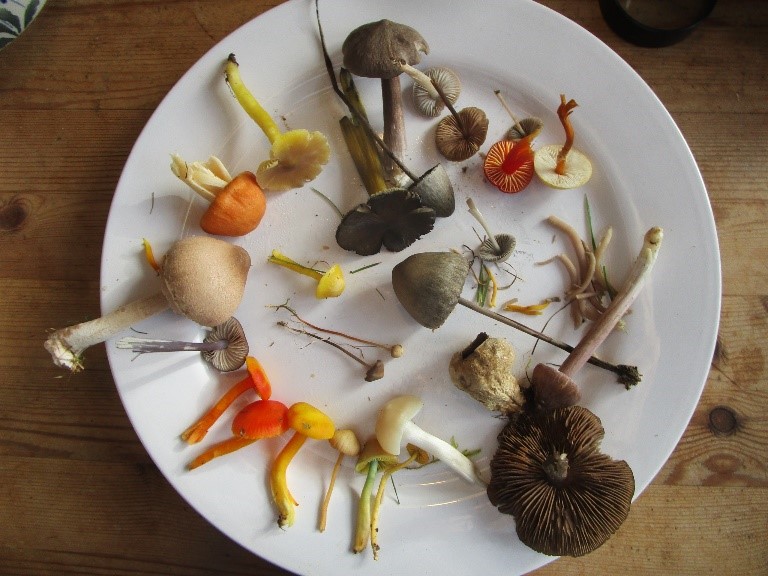
Waxcap Walks: Hunting for Grassland Gems
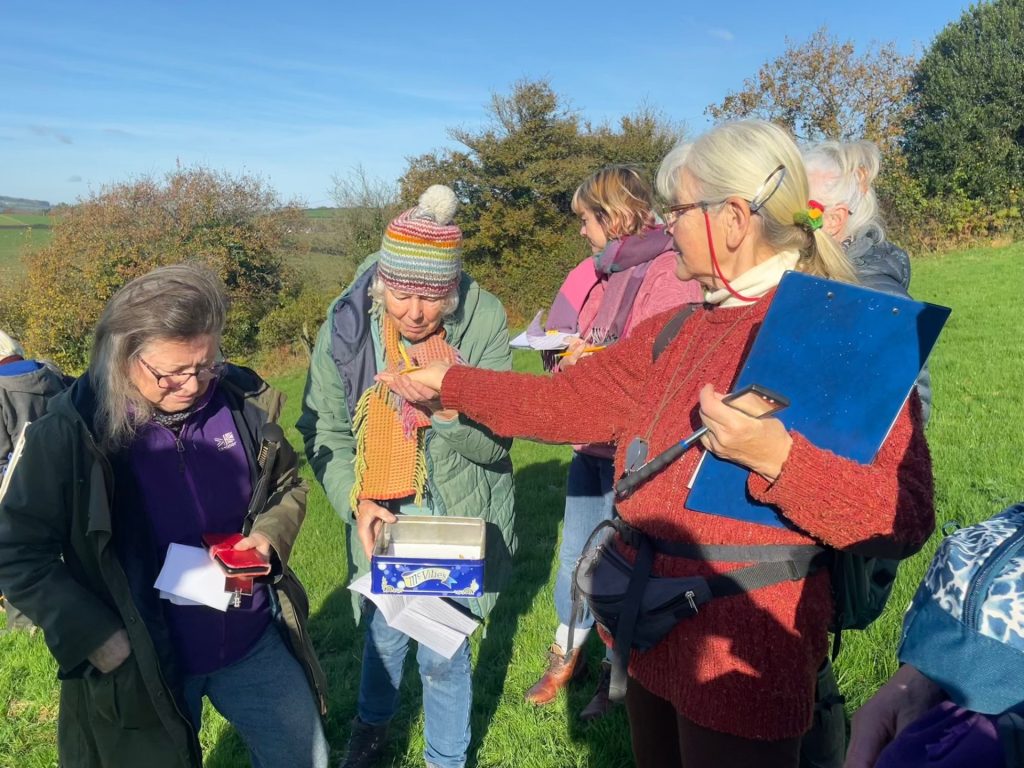
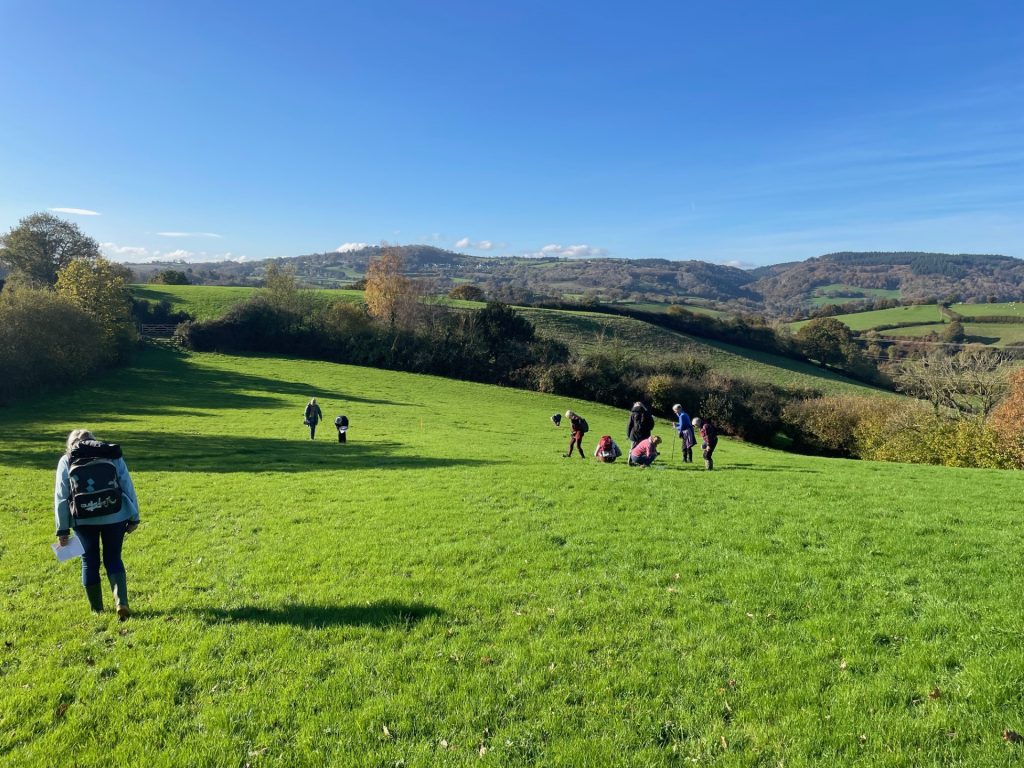
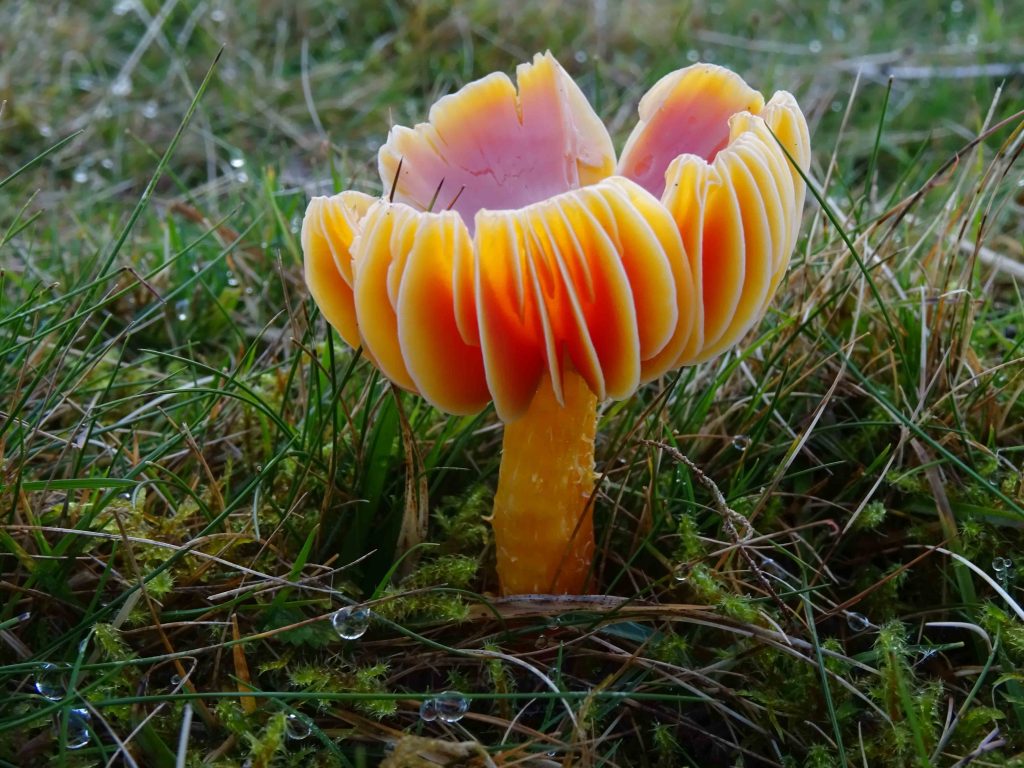
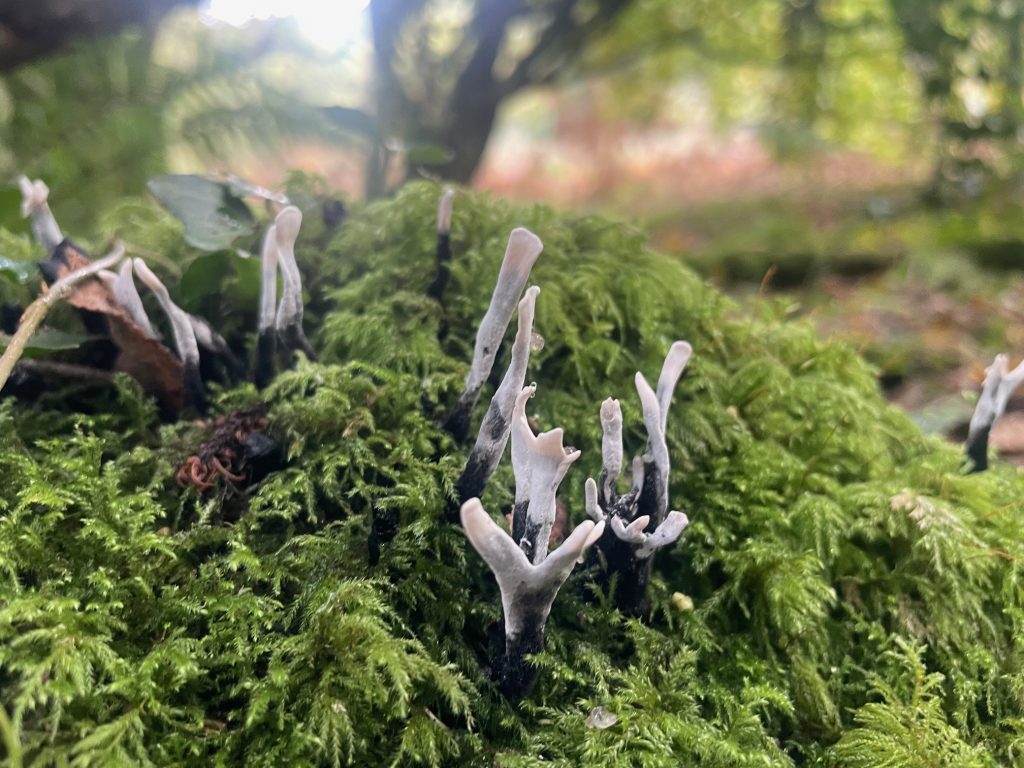
Many thanks to Audrey for leading two fantastic waxcap walks this month! We were fortunate to have a stunning days and delighted in discovering twirling pink ballerinas, the soap-scented oily, and the fascinating colour-changing parrots! As a special highlight, we even encountered the gruesome-looking Devil’s Fingers—a first for the farm this year!
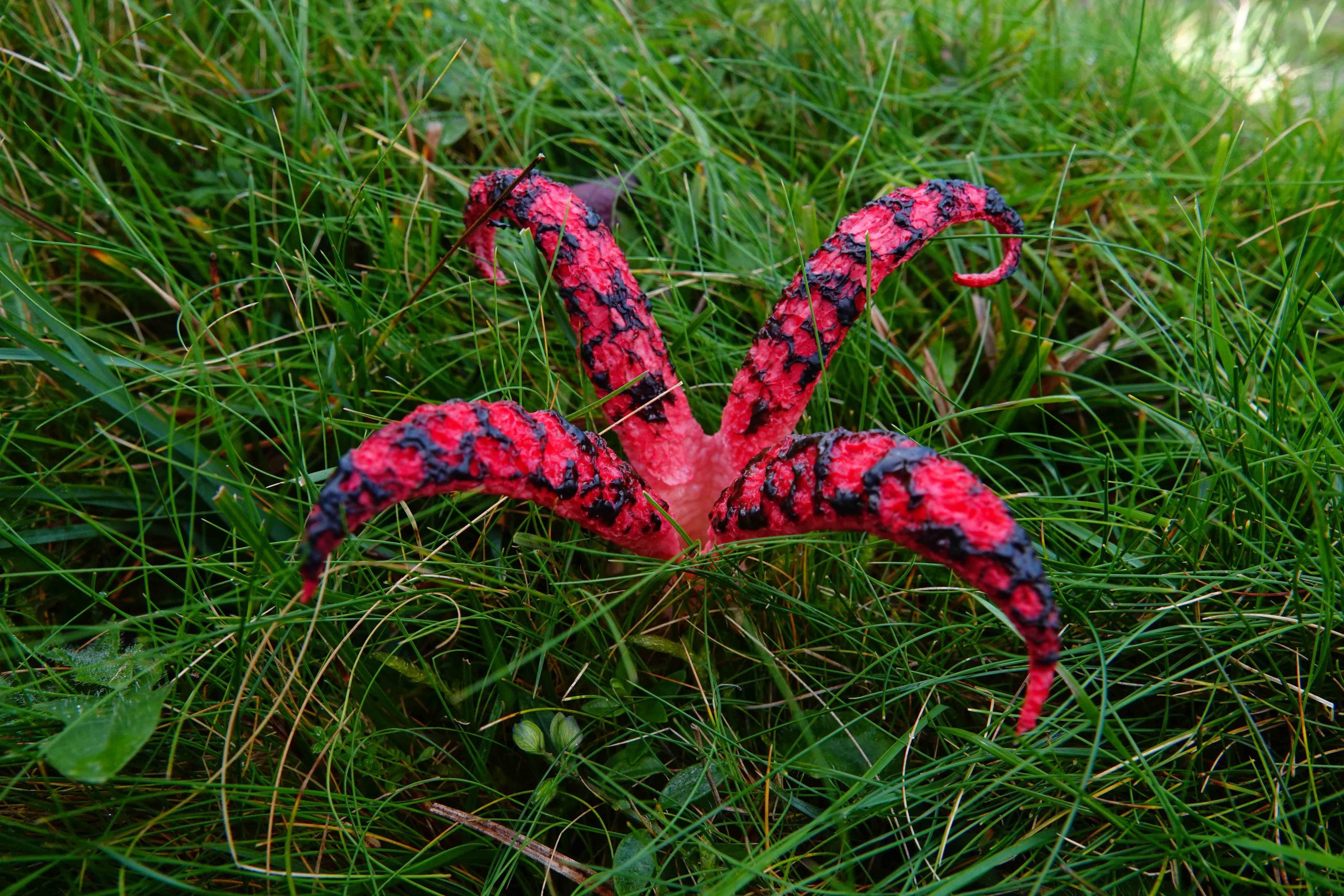
Waxcaps are rare treasures of unimproved grasslands and with over 20 different species recorded, Deer Park farm is a nationally important site. During our walk, we talked about the fungal indicator species, grouped under the acronym CHEGD (derived from their scientific family names) which include spindles, clubs, waxcaps, earth tongues, pinkgills, and crazed caps. These fungi thrive in low-nutrient, unimproved grasslands making them good indicators of traditionally managed land. Plantlife run a “Waxcap Watch” every year and by tracking the presence of waxcaps and other CHEGD species, we can gather valuable data to help protect and manage these rare grassland ecosystems more effectively.
For those keen to learn more, the book Grassland Fungi: A Field Guide by Elsa Wood and Jon Dunkelman is highly recommended.
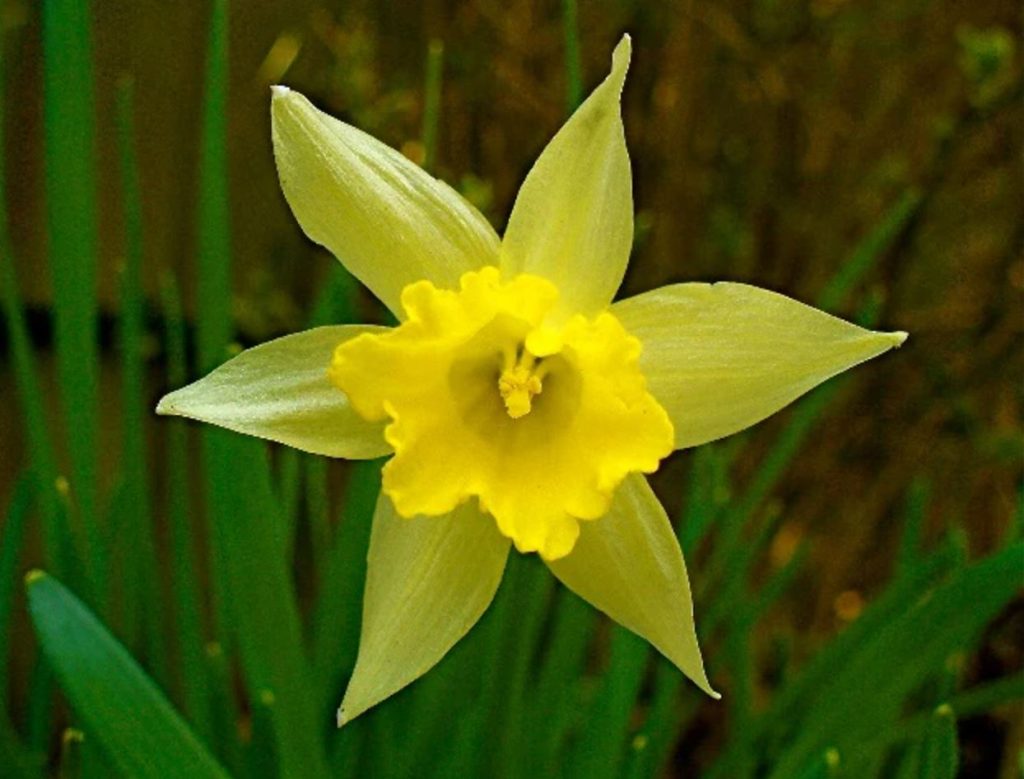
Marking No-cut Areas: Using Native Bulbs to Guide Contractors
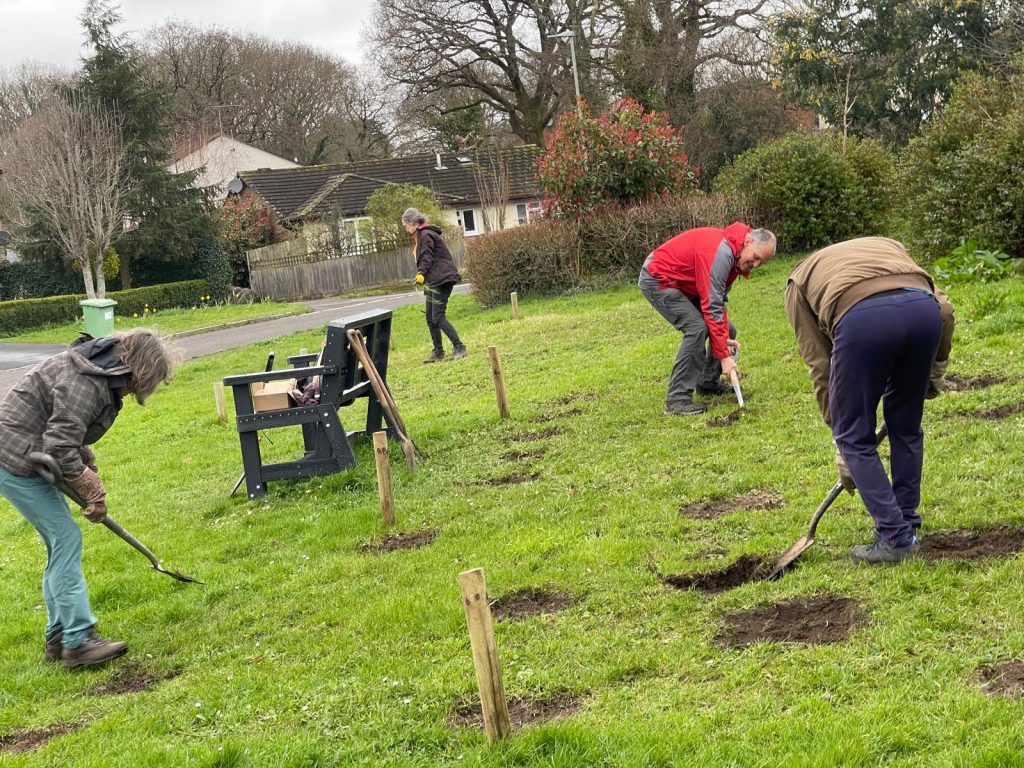
If you’re responsible for maintaining a local verge, now is a fantastic time to consider planting native daffodils (Narcissus pseudonarcissus). These bright, easily recognisable flowers serve as a natural reminder to contractors to avoid cutting during the spring months. By planting daffodils across the area you wish to protect, you can create a visual cue that encourages contractors to steer clear. Hopefully, this will allow for other wildflowers to show, making it evident that the verge should remain uncut throughout the summer season. Gee Tee bulbs currently have these in stock.
Book Recommendation
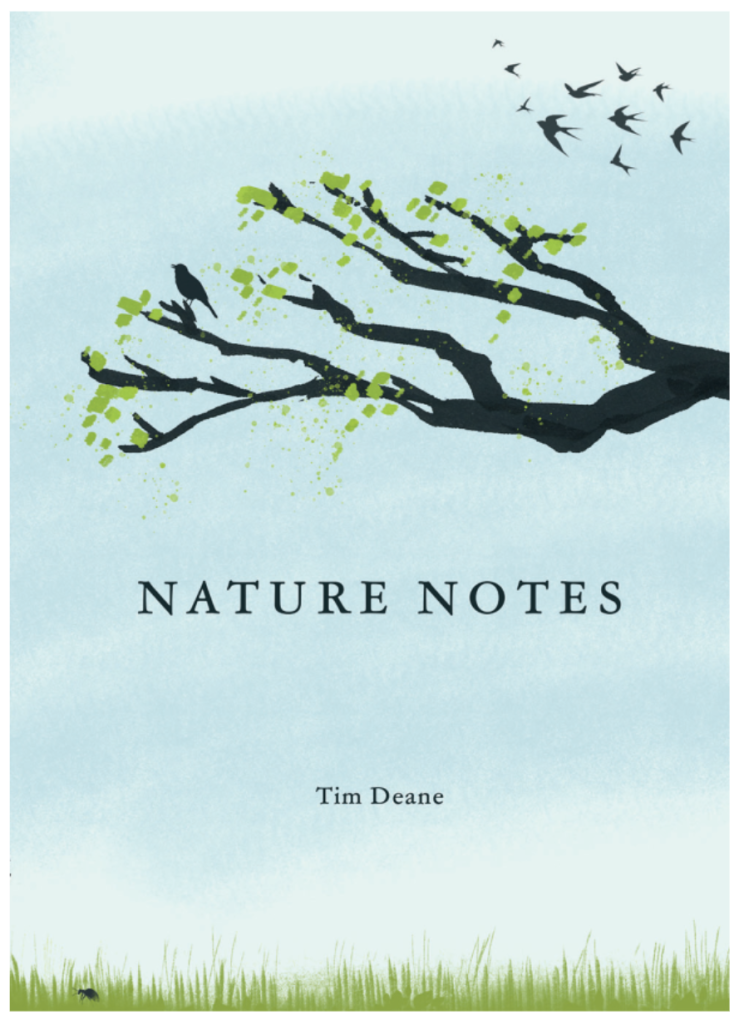
Thank you so much to Ashton WW Shira for this fabulous review of a local book:
Tim and Jan Deane of Northwood Farm, Christow, set up the first organic veg box scheme selling to local households in 1991.
As well as the delights of their produce, a regular treat was to read Tim’s newsletter, his writing so vividly conjuring up life as a grower. This gift was recognised by the Organic Grower Magazine which, over many years, published a regular column called Nature Notes and it is these we can now enjoy in this book.
In the fifty short chapters we accompany Tim on the farm as he lends you his acute powers of observation and, through his elegant descriptions, experience with him the weather and the soil, and get up close to the plants and creatures with which he shares the land. We hear the sound of the hornet buzzing in the paper lampshade on an autumn evening, are taken into the remarkable life cycle of the oil beetle and discover frog spawn deposited in hopeless places. We listen to the song of the thrush ‘so sweet, so perfect, so delightful to the senses that you’d like to fold this moment around like a parcel and carry it with you forever’.
The reader shares Tim’s puzzlement at how the tractor engine compartment became filled with straw, and the trials of growing vegetables with capricious weather and opportunistic wildlife his accounts often accompanied by a dose of rye humour. And who knew that rose hips were a constituent of itching powder?
Although Tim’s humility is evident, regularly telling us that he is no expert in the things that he describes, his curiosity and undoubted intelligence combine to make this a book rich with knowledge about the natural world (and beyond to the night sky). I have so enjoyed this book and I urge you to read it. You can get a copy by emailing Tim and Jan or by visiting The Organic Growers Alliance.
Dates for Your Diary
| We’d love to run this event if there’s enough interest—email me if you are keen! | Winter Tree ID session perhaps with a focus on the Ancient Tree Inventory |
| We’d love to run this event if there’s enough interest—email me if you are keen! | Hedgerow survey training |
| February | Beginners lichen walk |
Citizen Science Projects
Many of our wardens actively participate in the growing number of citizen science projects, which help collect valuable data. Over the winter months, there are a couple you might like to get involved in:
- New Year Plant Hunt run by the Botanical Society of Britain and Ireland (29th Dec – 1st Jan)
- Brown Hairstreak butterfly egg surveys run by Saving Devon’s Treescapes throughout winter. Contact Lindsay Mahon to sign up. There are already many wardens involved, so if you’d like to find others to survey with, let me know!
Round Up of Wildlife Warden Activity Across Teignbridge
Ashburton A big thank you to Elaine, who has been out and about again, delivering her fantastic wildlife gardening talk in Ilsington this month. The talk was wonderfully accessible to the whole community, regardless of their prior knowledge or level of interest. Everyone left inspired with practical ideas, and I’m excited to start a “dead hedge” this winter!
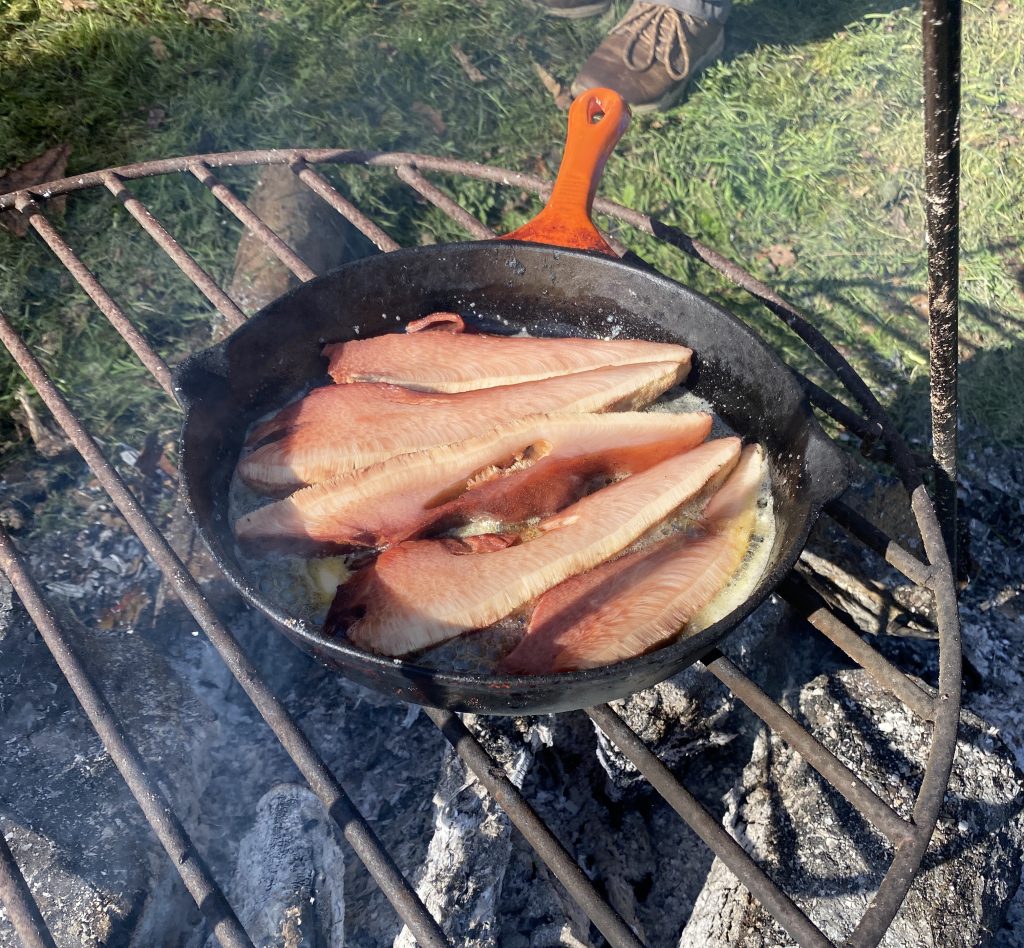
Ashton Shira continues to be busy, attending several events with the Teign Valley Facilitation Fund, including a deer management day, a hedgerow workshop, and a fungi event where she enjoyed beefsteak fungus cooked over an open fire—delicious! Shira has also shared our biodiversity resources at a recent Parish Council meeting, and we’re excited to see how this develops.
Chudleigh Chudleigh Wild and Wardens are always busy! Their jam-packed newsletter is a fantastic read, featuring events and great work happening across the parish including bat walks, verge management and supporting hedgehogs. Sue also highlights an informative video by Prof. Dave Goulson (Sussex University) about the impact of neonicotinoid pesticides on our wildlife and declining insect populations, with a focus on products used for pets. Have a watch!
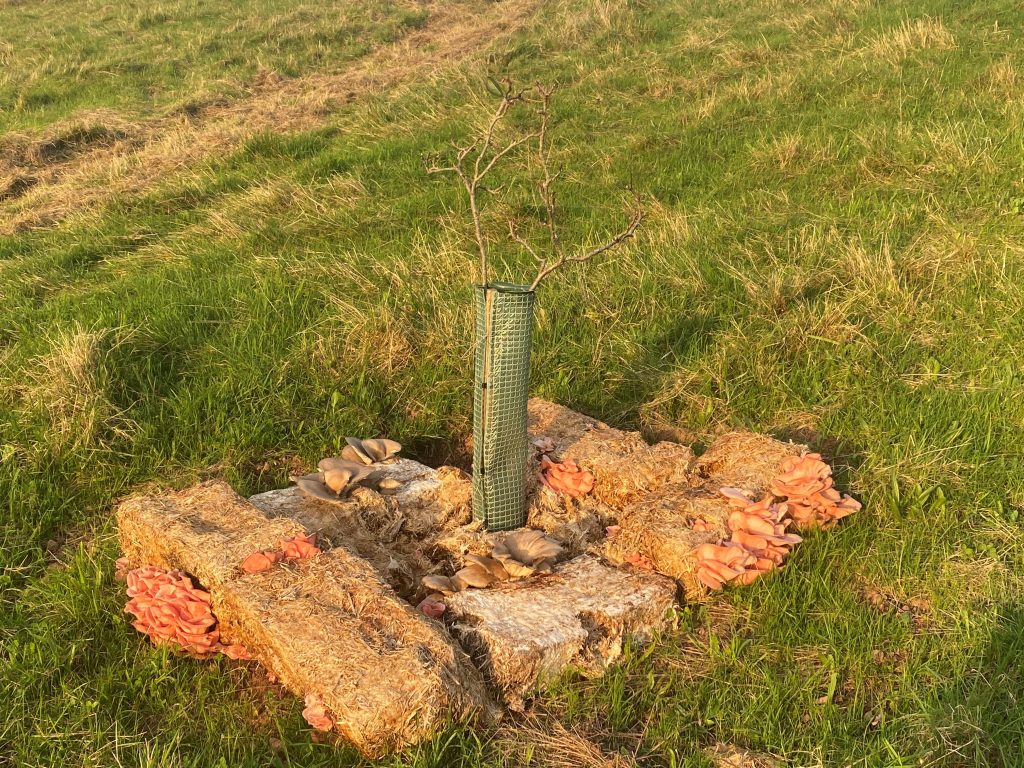
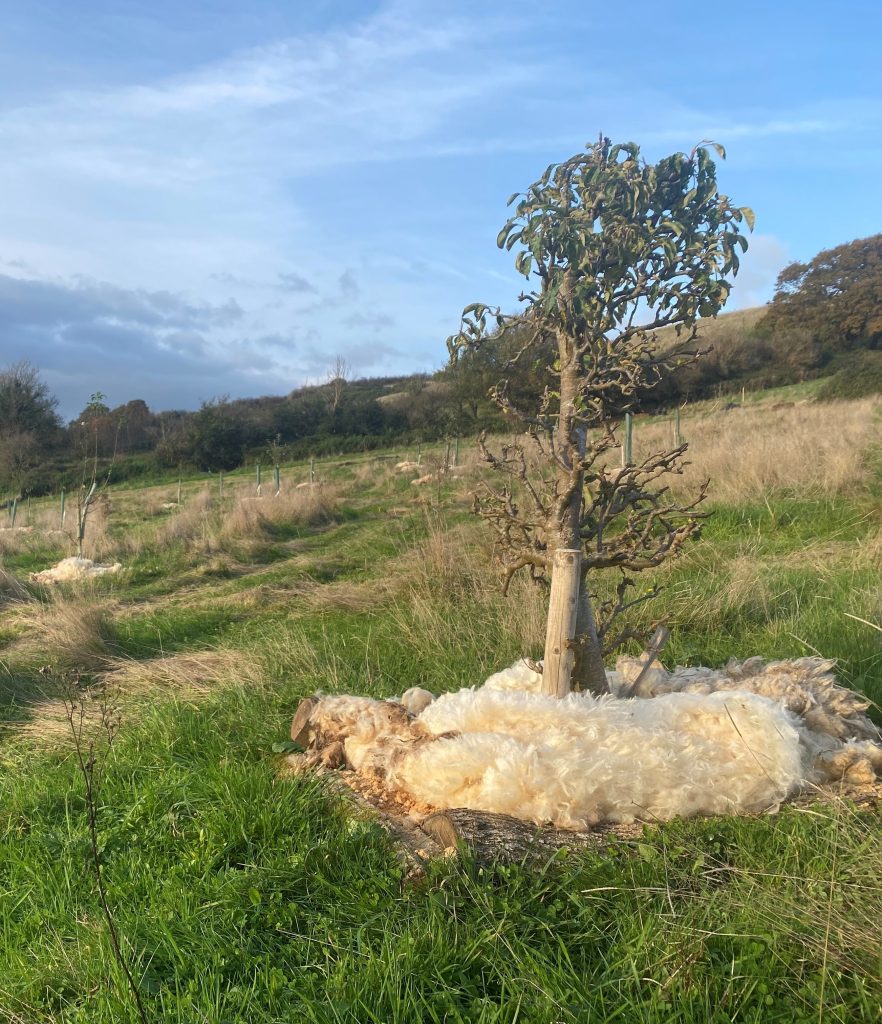
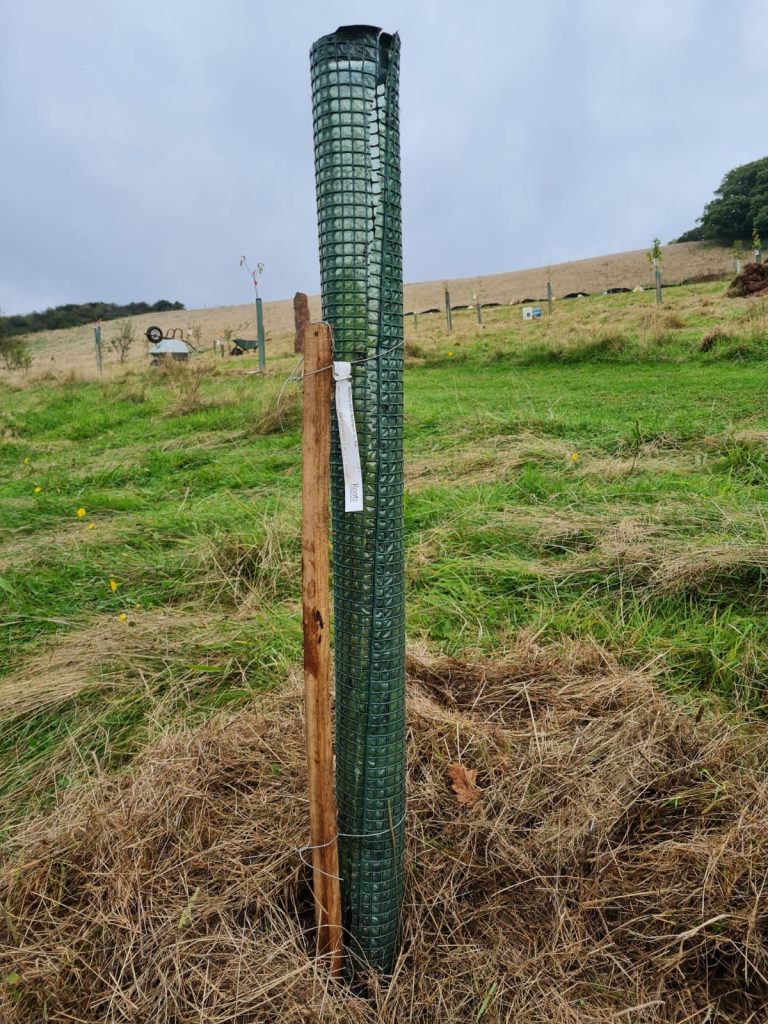
Dawlish At the Dawlish Water Community Orchard, 17 new fruit trees have been donated and planted. The trees were mulched with organic oak/straw, a by product from the local mushroom farm, and some have been covered with local sheep fleeces to suppress grass growth as the trees establish. Plans to plant a long fruit hedge across the top of the orchard are also underway, using mixed native whips with cherry, rowan, and crab apples as specimen trees. Homemade biochar will be used during the planting. The group hope it will be a connective, deep hedge, with plenty of food and habitat for wildlife. We look forward to hearing how it goes.
WW Scott has been hard at work starting a new group to care for the Dawlish Brook, with a long-term goal of increasing wildlife and flood resilience. The newly formed W.A.D.E. (Waterways Around the Dawlish Environment) group will receive support and training from ACT to help them get started next year.
Dunsford The Dunsford team is getting a lot done! Julia has been packaging and distributing free wildflower seeds at the village shop, while Jess wrote a great article on the Woodland Trust’s Ancient Tree Inventory. Julia, along with a small group including Doddiscombsleigh warden Jo, have been recording trees in the area as part of this initiative. Julia and Pip have also started Brown Hairstreak surveys, and anyone interested in doing this in their area can sign up through the Devon Wildlife Trust Treescapes project. Monthly activities, such as water sampling, riverfly surveying, Smatters, and supporting the Dunsford Eco Church Award continue!
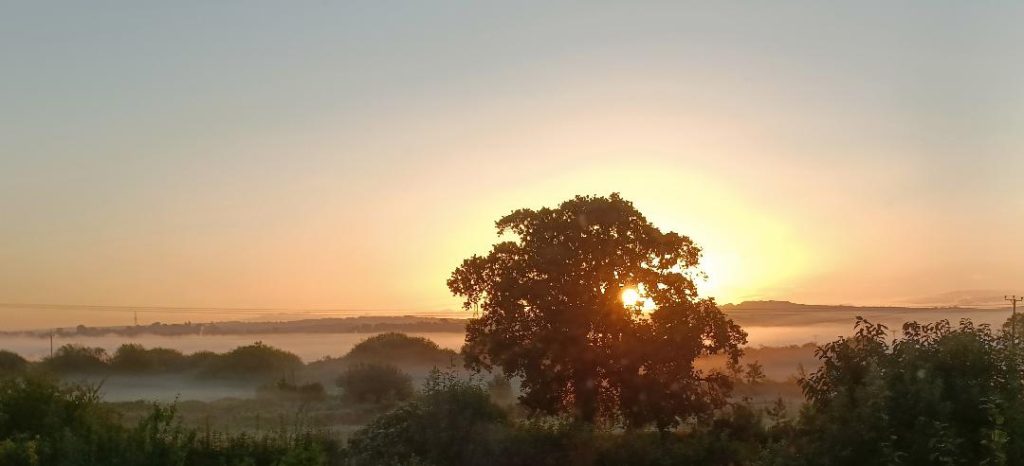
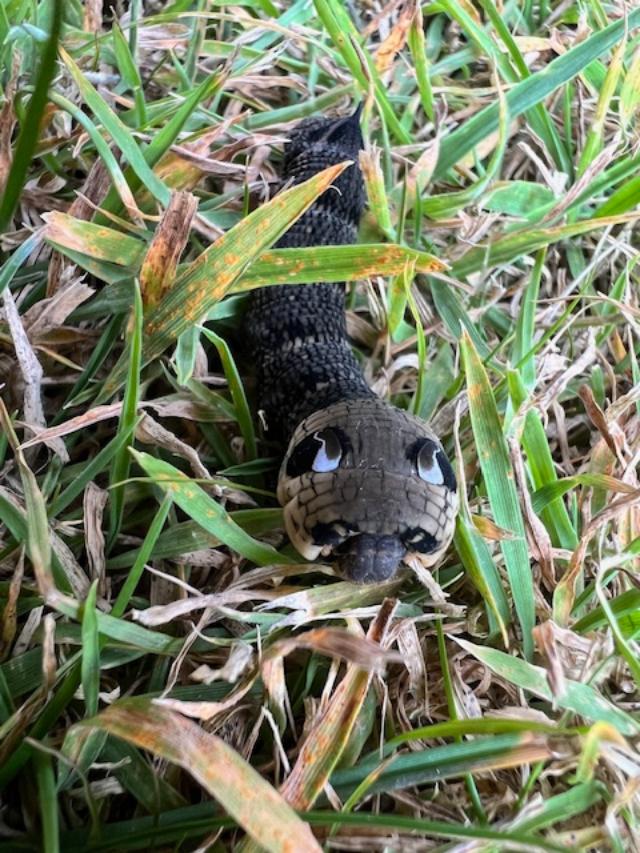
Exminster The Exminster Greenspaces team announced the winners of their summer photo competition, with the winning photos featuring a close-up of an elephant hawkmoth caterpillar and a meadow sunrise. This competition helped celebrate the natural world on the community’s doorstep, with prizes kindly donated by local businesses.
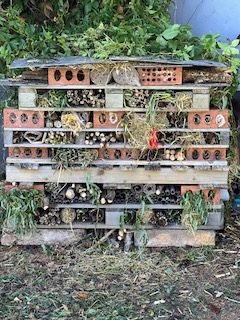
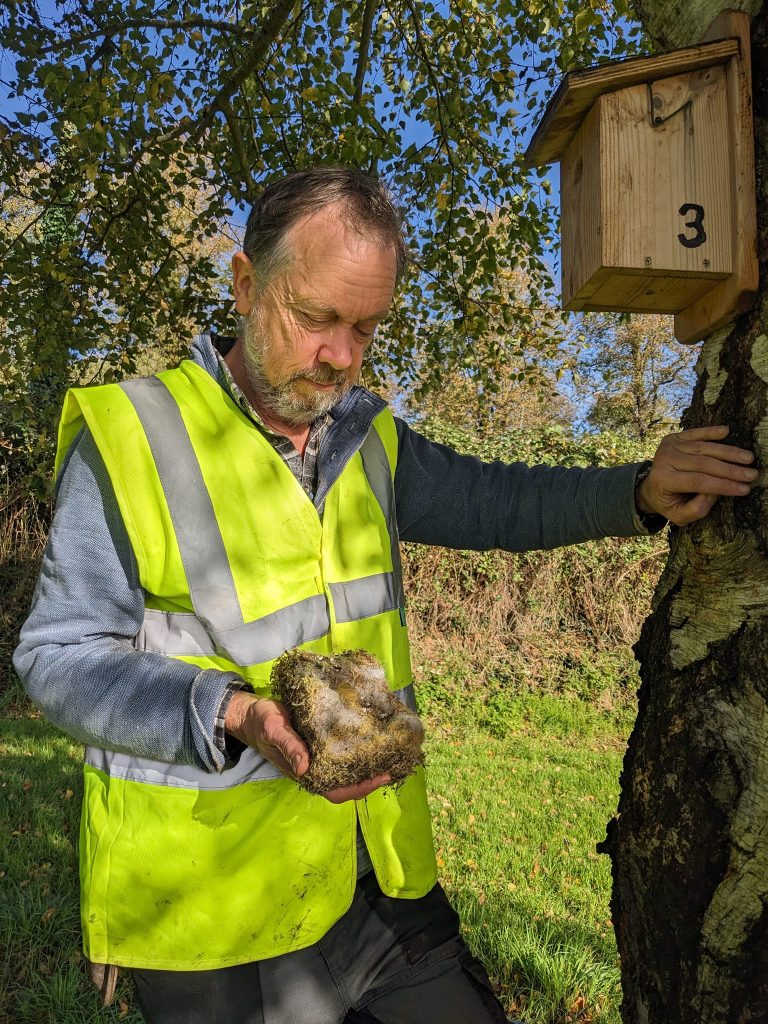
This autumn, the team has been busy working on key sites, including the churchyard and community orchard. They are pleased to report a 100% success rate, with nests found in every village nest box! In addition, a fantastic bug post has been installed in the orchard, generously donated by NHS New Leaf.
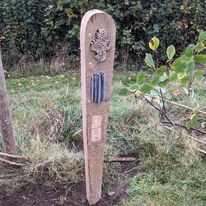
Hennock Chris has been developing a biodiversity database for the parish, which recently went live. It brings together data from national and local sources, along with sightings contributed by parishioners. You can explore this great community resource on the Parish Council website. Looking ahead, Chris plans to add pictures and create maps highlighting biodiversity hotspots in the area.
Ilsington As part of a series exploring “special places in the parish,” Dawn led a group of locals to a private site nestled below Haytor Rocks. The wet woodland has the River Lemon running through it and featured stunning old trees, lush ferns, and vibrant mosses. Dawn introduced the Ancient Woodland Inventory to the group, and there was discussion around what makes a temperate rainforest. Since the visit, she has returned to document the old trees noted during the walk.
Linda organised the fantastic “Wildlife Gardening” talk at the village hall this month. A big thank you to Elaine from Ashburton for joining us and delivering such an great presentation!
Ipplepen Ippleplanet and the wardens have received approval from the Parish Council to trial the planting of two apple trees in the newly established community orchard—an exciting step forward! Given the area’s thin, stony soil, they aim to assess its suitability before expanding the planting. The group also hosted a well-attended talk by Teignbridge ranger Sian, who shared insights on managing the region’s nature reserves, with a focus on the nearby Orley Common.
Lustleigh Rachel is exploring the idea of starting a ‘Lustleigh Wildlife Society,’ and we look forward to hearing more as plans take shape.
Stokenteignhead Jill recently discussed alternatives to plastic laminator pouches for posters with a parish member. The Warden WhatsApp group shared many helpful ideas, including waterproof printing paper, A4 display boards in prominent public spots, Swedex eco-friendly pouches, and even creative reuse of waste plastic by ironing greaseproof paper. If you would like to join us on the friendly WhatsApp group please email me.
Teign Valley Wardens Many wardens in this area have been actively supported events organised by the Teign Valley Facilitation Fund which has been established to help local landowners and farmers collaborate in efforts to reduce flooding, support biodiversity, create habitats for priority species, and address the climate emergency. It’s fantastic that wardens can also benefit from these training opportunities, and we hope they will be able to assist landowners with future surveys.
Starcross Ali has been pleased to see people in Starcross showing interest and motivation in supporting the local hedgehog population. She recently wrote an article for her local parish magazine to raise awareness about how to help hedgehogs and to share the good work she and other volunteers have been doing in the wild area at Bonhay Park. Their efforts include allowing grasses to grow longer, adding new hedging, and creating gaps under fencing to welcome their prickly visitors!
Trusham Anna has been assisting Fiona Mathews from the University of Sussex with a project aimed at tracking Barbastelle bat populations. The survey at a wood in Trusham was a great success, revealing not only Barbastelle bats, but also Noctules, Common Pips, and Serotines.
Helen updated the informal Teign Valley wildlife group on the incredible species lists she has compiled for Trusham churchyard since she began recording in 2021. She has now documented 539 invertebrates, 290 moths, and 154 plant species!
It is a great time to get ahead for the coming season, so please feel free to email me if:
- You’d like to help us find landowners in your parish who may be interested in having a County Wildlife Site survey next season.
- You’d like to connect with other wardens who have successfully run projects that could provide insights or practical advice for your own parish.
- You’re interested in training opportunities on a specific topic or would like to offer training to other wardens on something you’re passionate about.
A huge thank you to each and every one of you for your incredible work for nature and wildlife over the past year. Your efforts really do make a difference, and we couldn’t be more grateful for your ongoing support and dedication. You’re an amazing group, and together, we’re accomplishing so much!
Wishing you all a very Merry Christmas and a Happy New Year and looking forward to more great work together in 2025!
Vicky